

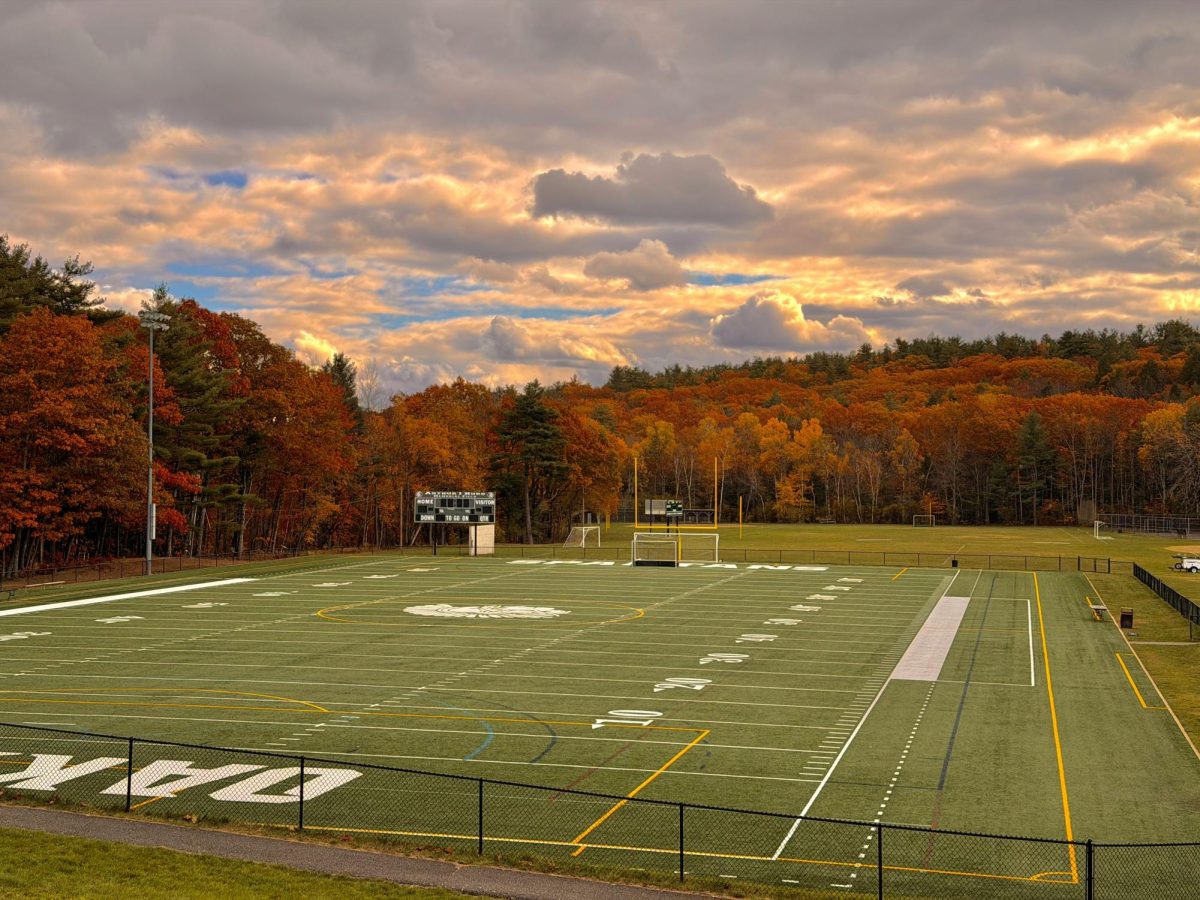
One minute, you’re sprinting down the sideline, and the next, a sudden “pop” ends your season.
While contact injuries are a known risk in sports, more and more athletes are finding their careers halted by a silent, invisible threat under their cleats. This phenomenon, and the devastating “turf tragedies” that follow, are directly linked to the rise of artificial playing fields.
Have you ever suffered an injury like turf burn, a pulled hamstring, or even a torn ligament while playing your favorite sport? Chances are, most athletes have experienced at least one. All of these injuries have one thing in common – turf.
As the use of synthetic turf becomes widespread, certain patterns are emerging in high school, college, and professional sports. Injuries are happening again and again as a result of turf. These injuries can be as small as a burn or as drastic as a torn hamstring, which can ruin your sports career.
The roller coaster of emotions is where athletics can bring people from their highest point to their lowest in the span of one misstep.
Cam Scerbo, soccer team captain and three-sport athlete, shared his experience seeing turf-related injuries happen right before him and his team. “We saw somebody just take a step in the wrong direction in a knee brace, just take one step and tore his ACL – one of the best players on the team.” Situations like this don’t always happen. It’s worth taking a deeper look into when it’s a young athlete’s career bobbling on the fence of injury and stability.
Although some injuries may not be directly the result of turf, there is a strong correlation. The most significant comparison is between non-contact injuries compared to contact injuries. Most contact injuries (person-to-person) are inevitable and can’t be avoided.
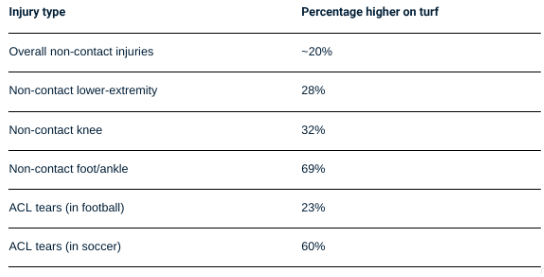
Non-contact injuries are proven to be linked to artificial turf compared to natural grass, according to many organizations, such as Mass General Brigham.
For athletic facilities with tight budgets, turf fields have their perks. Having a one-time installment fee and minimal maintenance cost, it sounds like a plus for companies, teams, and athletic facilities. While a turf initial installation may cost over a million dollars, replacing turf may cost closer to $600,000. Synthetic turf can last around 12-15 years.
The things you have to do to maintain a grass field in order to make it an unfit option for certain places. For example, schools have to pay for water, cut the grass, and paint the field. All of these things add up over time, so for places with a smaller budget, turf may sound like the better option.
When fields aren’t maintained, it can lead to wear and tear on players in the long run. Junior Oakmont football player Silas Roy received a stress fracture in his right shin and wear and tear due to a poor practice field in less-than-ideal playing conditions. This goes to show that natural grass isn’t always necessarily superior to turf.
Injuries can still happen on grass, but the statistics show that grass is the better playing surface when in ideal conditions for players. According to Mass General Brigham Football ACL tears are 23% more likely when playing on artificial turf. If it comes down to being safe on the playing field, grass has a lower risk factor.
With the rise of turf over grass, these injuries are popping up left and right, and show why you should keep your grass field. Natural grass can benefit the players’ well-being on and off the playing area.
It’s not just high school teams or teams that don’t play professionally. It is this high level of play. Players around the world playing sports are experiencing non-contact injuries due to turf fields.
Owners of professional sports teams, for example, the NFL, can afford grass fields but choose not to have them. This is because of the cost and the high standards the NFL wants the grass field to be up to.
With the evidence towards turf-related non-contact injuries being safe is an utmost priority. Some things you can do to limit these injuries are: properly stretching, stability exercises, and wrapping sensitive areas like the ankles with tape. These things will limit the effect of turf and prevent turf injuries.
Scerbo emphasized that he would rather play on a bad turf field than a bad grass field, but on the other hand, he likes playing on a good grass field compared to a good artificial turf field.

Why is this truly the case? When speaking about artificial turf, Oakmont Football Coach Mr. McGrath said, “[Turf] It’s just more consistent”. This is a very crucial thing that many student athletes agree with. Many have heard the phrase “consistency is key.” This is something that the athletic department relies on.
Artificial turf may offer convenience and lower maintenance costs, but when athletes are tearing ligaments just by changing direction, the trade-off doesn’t seem worth it. Sports are already unpredictable enough without the field itself becoming the opponent. While turf is more realistic for some schools than well-maintained fields, professional teams have no excuse for choosing convenience over safety. If leagues really do care about their players, it’s time to stop blaming bad luck and start questioning the surface under their cleats.
Advocating for the elimination of turf is key to changing it. With strong advocacy in a couple of years, turf should be moving out, and grass should be moving in.