

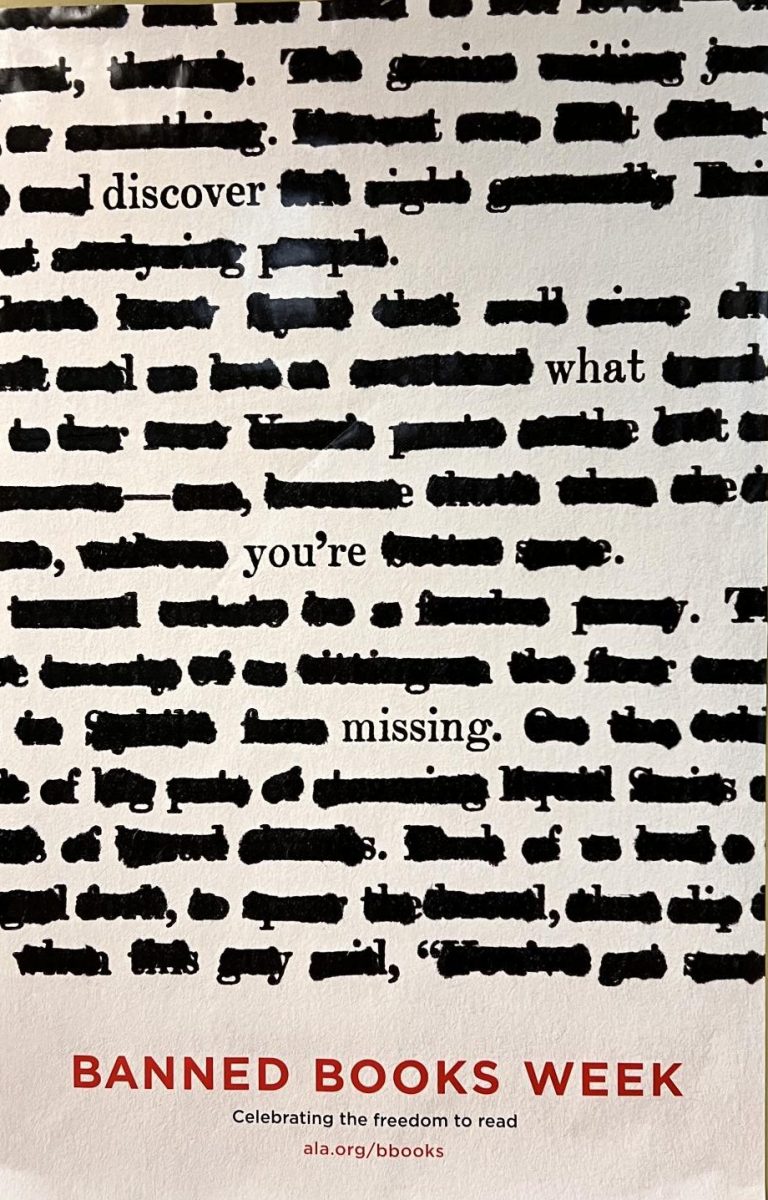
To Kill a Mockingbird includes ideas about racism in a southern town during the 30s and how a black man was falsely accused, sentenced, and eventually murdered. The Perks of Being A Wallflower includes ideas of sexual assault and struggling with drug use.
Both of these books are banned in many high schools across the country. They feature topics that make people empathetic and aware of the cruelty the world holds.
The U.S, now more than ever, is facing a growing issue with banning books. The nation’s children might never know what happened to Tom Robinson in To Kill A Mockingbird or what ‘the caged birds sings’ means in I Know Why A Caged Bird Sings.
These books are classics that teach and show kids important life lessons and open their eyes to the not-so-innocent life they aren’t as well acquainted with.
More importantly, the nation’s children won’t have control over what they learn or how they learn it. By reading a diverse background of books, students get a diverse idea about life. Students gain knowledge beyond their own lives and privileges that not everyone has or has had.
Oakmont English teacher Amanda DiMauro said, “The banning of books is concerning to me as an English teacher because it raises the question of who gets to decide what is acceptable for people to read? As a high school teacher my students are heading toward adulthood and developing their own identities and to restrict their access to texts would be like restricting their understanding of the world we live in.”
In 2024 alone almost 2500 books were challenged according to American Libraries. The bans have affected every state. Massachusetts introduced bills S.2696 and S.2328 that combat the wave of book bans drowning the United States. The bills won’t completely outlaw book bans but instead create a stricter system for banning and challenging books in our school systems.
Although Massachusetts has implemented bills to avoid avid bans, other states have hunkered down and actually promoted the bans.
Texas has introduced Senate Bill 13 or SB13. The bill changes how schools determine if books are fit to be in their school libraries or not. Before the bill, librarians and qualified employees had a council that would determine what books could enter and stay in the school libraries.
The bill now makes it so that parents of any district can create their own council if enough parents want one. The books go through the unqualified parents who get to vote on whether the books are appropriate for everyone’s children or not.
Many of the books that are being challenged contain racial topics, LGBTQ+ themes, and sexual content. The claim is that the books make students uncomfortable. Most of the themes are simply things that shaped and affected America.
All of the books being banned that contain these topics are being read and accessed by high school students, who are capable of handling sensitive topics responsibly.
Oakmont’s librarian Jennifer Morin said, “I’m a parent. I want to protect my children. And to be clear, parents do get the final say on what their own children may or may not read. It becomes an issue when someone thinks they should be able to determine what other people’s children, or an entire community, should not read or have access to.”
A parent’s job is to protect their children from anything negative or harmful, but banning educational books for these young adults isn’t going to protect any child in the long run.
Student and Teacher Censorship
Books are the biggest piece of literature that schools use to educate. The banning of books harms children’s extent of knowledge of topics they normally aren’t aware of or well educated on.
By removing these topics from classrooms, the children of the future become less knowledgeable and more ignorant of the past that shaped our country into what it looks like today.
Censoring and not covering these sensitive topics leaves students to follow one overall idea created by the book bans.
Instead, students are left to stay and think inside the box instead of being able to form their own ideas and opinions.
With this widespread idea comes the lack of education. Students aren’t getting a full education. These parents and government officials’ curriculum is leaving students unprepared. Not teaching students fundamental skills like critical thinking and forming opinions creates a future where students are severely behind and not even meeting basic expectations.
Beyond high school students being harmed during this, teachers and school librarians are also being deeply affected by the bans. Some teachers and librarians have found themselves self-censoring without even noticing.
Many teachers have gotten rid of their classroom libraries amid the book bans. In some states, teachers are responsible if a student/parent finds a book offensive. Some teachers in those states have even been reprimanded and faced punishment for the students and parents finding a book offensive.
Oakmont’s School Librarian Mrs. Jennifer Morin said
As the book bans increase, librarians and school teachers see themselves second-guessing their own judgment they’ve followed for years. School curricula weakens, and censorship heightens as these bans continue.
“Those who fail to learn from history are doomed to repeat it.”- Philosopher George Santayana
A quote most have heard since we were little, it was the explanation for having to see the terrible, gruesome images from the Holocaust and having to listen to the terrifying real-life accounts of the slaves in America.
Without these books being taught, many generations after us will forget or not even know what happened in the country’s history, being left to repeat the history once drilled into our brains.
Oakmont senior Mikaela Groncki said, “I think it’s crazy to ban books, the books aren’t trying to persuade you to be bad think bad, or do bad, they’re just either educating or entertaining.”
Young minds can’t accept something by ignoring it. They have to understand the issue for it to have its own place in our society. Wiping high school curricula “clean,” leaves students uneducated and unsympathetic to very different situations from their own.
We cannot avoid uncomfortable situations; if we do, we will only go back in time.