



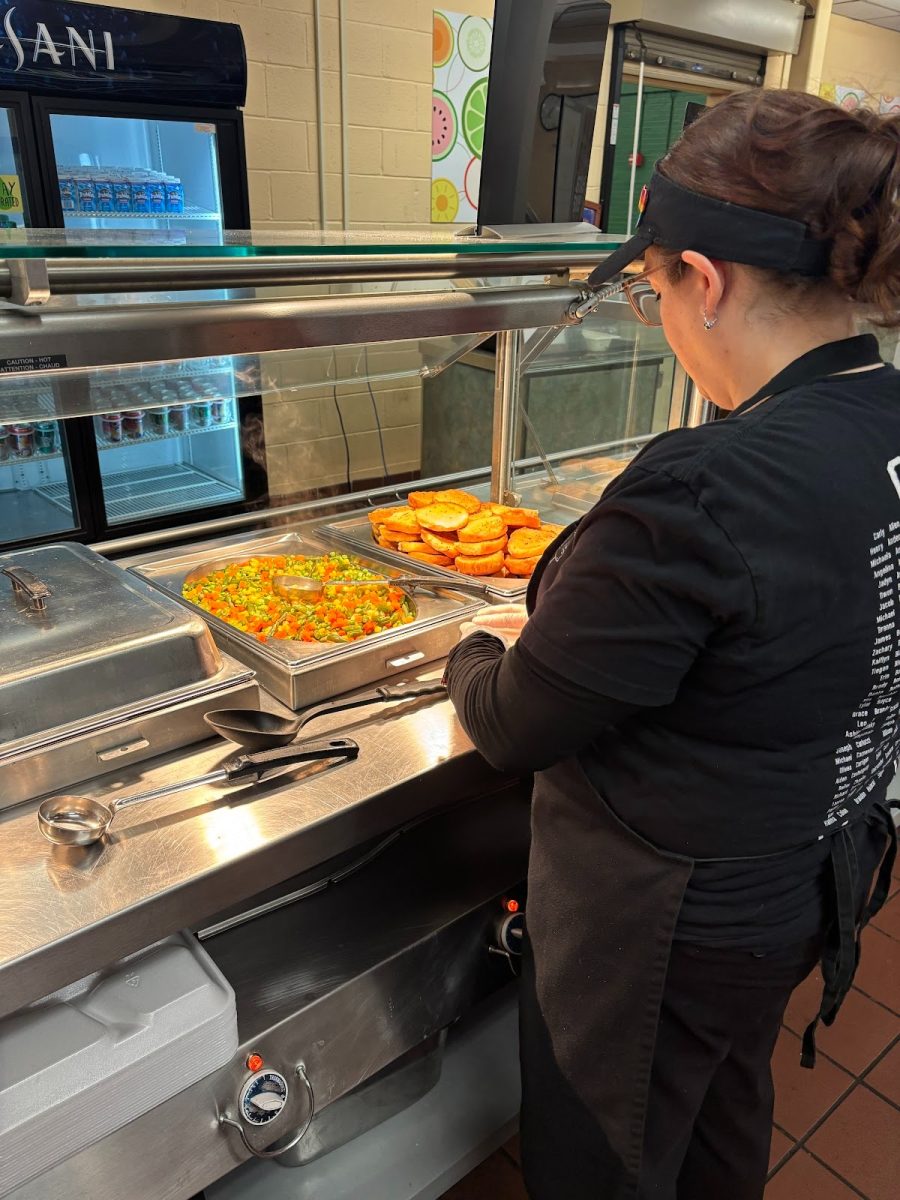
The strife and devotion of cafeteria workers are often underappreciated as a result of their hard work in hundreds of thousands of schools around the United States.
However, this is not the case in the Ashburnham Westminster Regional School District. Within AWRSD, cafeteria staff feel a strong sense of recognition for their efforts. Students are generally respectful, which makes the dedication of cafeteria workers more visible and meaningful, even as they face expansive mental and physical demands behind the scenes.
Ms. Catrina Dodge has been the Oakmont Regional High School cafeteria manager since 2017. She starts her mornings at 6 am here at Oakmont, preparing breakfast by herself. Recently, the kitchen lost several staff members, forcing her to take on multiple roles in the cafeteria.
“We started with twelve staff members; we are currently down to eight,” Dodge said. “Being short-staffed really makes a big impact for myself doing my job as a manager. I find it really important that all my staff are cross-trained.”
Cross-training is useful for workplaces like cafeterias. Teaching an employee skills for roles outside their primary job description can build a more resilient and flexible workforce that can adapt to absences. This strategy is heavily used when the kitchen is shorthanded here at Oakmont.
Even with all hands on deck, there is a vast amount of work and preparation that goes into each school meal. In some cases, these imperative tasks are laboring — leading to feeling overworked or fatigued.
“Halfway through my third lunch, I start prepping for tomorrow, which is pasta. I fill up that pot, and put 35 pounds of pasta in there, then I have to put 20 pounds of meat in the skillet,” said John R. Briggs Elementary cafeteria worker Ms. Julie Martin.
Over the years working at Briggs, Martin has experienced exertion in her daily duties — but she has since discovered multitasking strategies to streamline her work.
As indicated by Ingenious Culinary Concepts, the physical demands of cafeteria jobs can take a toll on your body. From standing for long hours to lifting heavy objects, cafeteria work can lead to profound fatigue and discomfort.
Unfortunately, in addition to the physical strain, school cafeteria workers don’t always get the respect they deserve.

“The majority of the time, we feel appreciated by the staff and students. I find that it is usually the freshmen that we have a hard time with because they aren’t used to the cafeteria yet,” said Dodge.
While freshmen are still adjusting to the flow of school lunch, upperclassmen know the menu inside and out. Oakmont senior, Narjis Akaabi, even considers herself a school lunch fanatic.
“I love school lunch!” said Akaabi. “The cafeteria staff is very kind. I appreciate all the hard work they do, especially on the days when they serve chicken and waffles.”
But not all students are like Akaabi. In fact, some students undervalue school cafeteria workers for a number of reasons.
This can be because of feelings of shame about free or reduced lunch or social stigmas from negative media portrayals. Common “evil lunch lady” stereotypes in the media are geared toward kids, which can lead to profound impacts on perception later in life.
According to Antagonist Wiki, this stereotype can be seen in one of the enemies in Johnny Test, a TV show for children. This villain is a lunch lady who has greenish skin and speaks with a German accent. She consistently serves disgusting food and becomes a nemesis to Johnny in the episode, “Johnny Applesauce.”
While fictional characters like the green lunch lady in Johnny Test exaggerate cafeteria workers for humor, they can also reinforce negative stereotypes about the people who prepare the food and the food they serve. These depictions contrast with the reality of school food, where staff are responsible for meeting nutritional guidelines and maintaining safety standards.
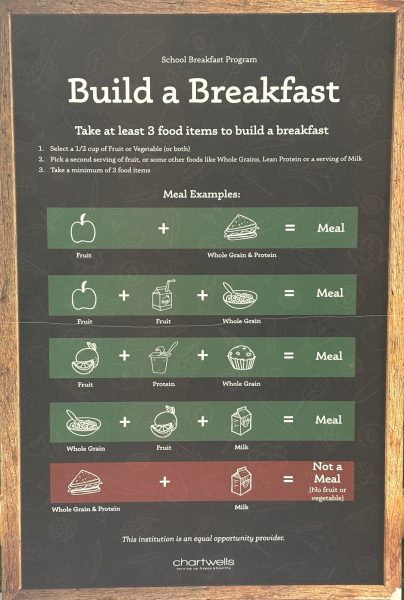
AWRSD schools receive food products and shipments from Gordon Food Services. The cafeterias are managed by Chartwells, a food service provider geared toward education and preparing students for success after high school.
As stated by the AWRSD website, “Together with Chartwells K-12, we do more than feed hungry students at Ashburnham-Westminster Regional School District. We improve the well-being of our students by preparing fresh, delicious, and nutritious meals they love.”
Even though food services in education, such as Chartwells, set high nutritional standards, a study conducted by EducationWeek shows that one in five high school students nationwide are unlikely to get school meals precisely because of poor taste and quality.
But here at Oakmont, students’ unusual distaste for school lunch is not because of low-quality food, according to Dodge.
“What a lot of students don’t realize is that we use the same food products that you would find in a grocery store. A lot of ingredients we use are name-brand, so when students complain, they have no idea this is the same food that they eat at home.”
Yet, school food is highly criticized by some students despite receiving free, hot, nutritious meals. Why is that? The National Library of Medicine indicates this is due to a lack of knowledge about school food and unfamiliar food items.
This lack of understanding often shapes how students react to the meals served, leading to skepticism rather than appreciation.
Lisa Hooten, a cafeteria worker at Briggs, doesn’t take it personally when the kids question the food served.“It was funny, one day the kids thought the pizzas came from the pizza shop. I love that the kids ask questions about the food. It doesn’t make me angry that they don’t know where it comes from.”
Before working at Briggs, Hooten was a preschool teacher and a waitress for 33 years. Her love for working with children and serving food led her to become a school cafeteria worker: the perfect combination.
Now, years into her role at Briggs, Hooten found a sense of family in her daily work.
“This is probably my favorite job…I work with this amazing group of women who are all totally different. It’s like a sisterhood working here, we all get along very well, and we know when to give each other space,” said Hooten.
Both Briggs Elementary and Oakmont High School cafeteria workers have a very close relationship with their staff, which consists of hard-working women.
These ladies spend hours with each other every day. They talk, have therapy sessions, fight, and in the end, they are always there for each other. They truly are one big family.
Whether you like school lunch or not, behind each tray served is a dedicated team of culinary staff. From early mornings, lifting heavy products, maintaining strict nutritional guidelines, and staff shortages, they do much more than simply serve food here at AWRSD. They care for the students and the coworkers they stand beside.

Juneanne McLoughlin • Feb 6, 2026 at 10:30 am
Nice article Ella
Cathryn Bebeau-Smith • Jan 28, 2026 at 4:07 pm
A well-written article, I really appreciate the various perspectives mentioned and the information so kids can really understand how their school lunches are planned for and served each day. As a parent in the district, I am thankful that not only my two daughters get well-balanced meals each day but many other families benefit as well. And kudos to the staff that prepare the meals each day, their efforts do not go unnoticed!
~Ma B
Lisa Hooten • Jan 23, 2026 at 5:12 pm
Great article Ella it really is a joy to do what I do at Briggs .I hope to work there til I retire ,it helps to work with team players .