


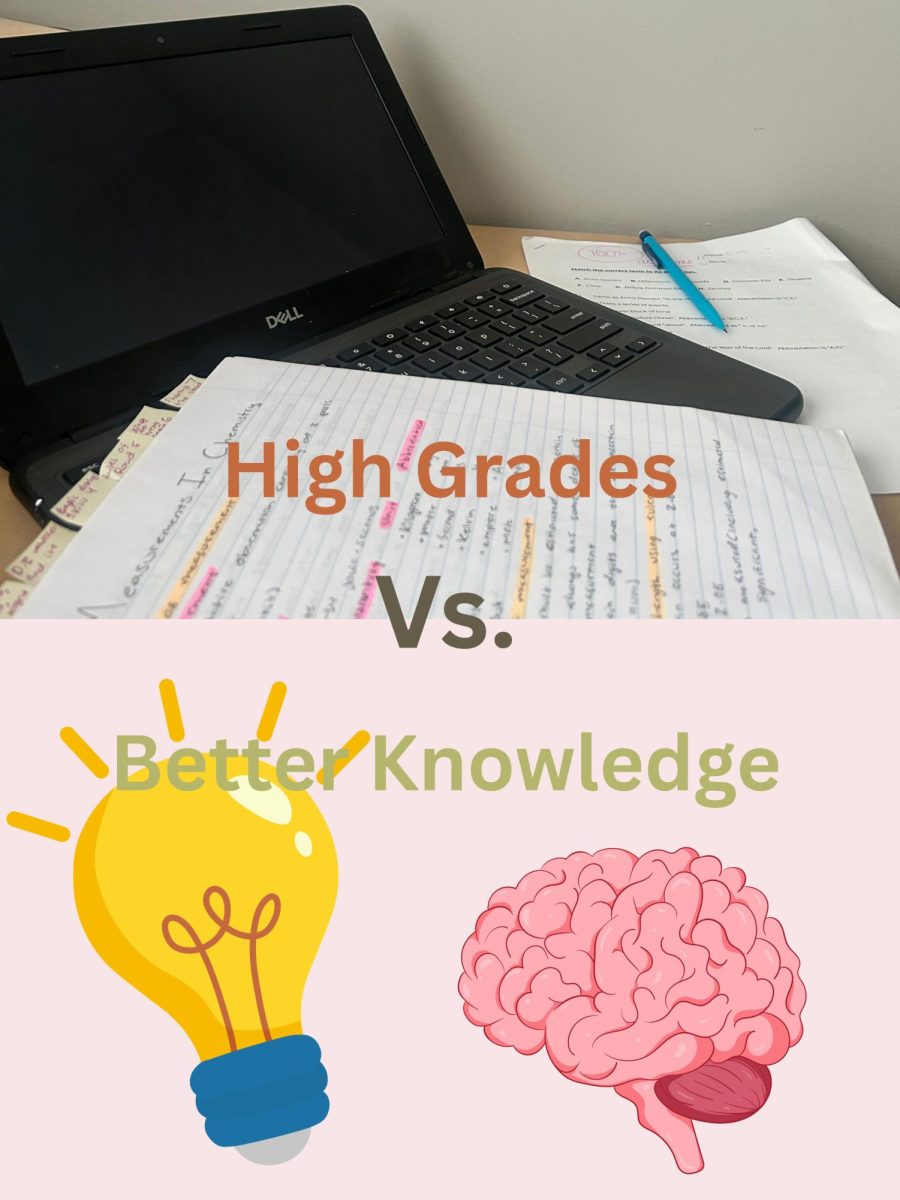
Seeing the percentage in the top-right corner of a test can be overwhelming, especially for high school students. The pressure of exceeding an outstanding grade can hinder one’s ability to learn the material effectively.
Many grades can falsely represent how a student comprehends the material or concept of a course. This is due to many grading systems in the United States are receiving inaccurate scores. These scores contradict the academic knowledge.
According to Equiteable Grading Projects, a consulting firm established by the Crecendo Education Group, nearly 60% of students’ grades do not accurately match their understanding within the course.
“Each year, millions of high school students are receiving grades that don’t represent what they actually know and have learned…” said Guadalupe Guerro, CEO of the Partnership for Los Angeles Schools. “Yet, they are presented as the truth and set expectations about what that student can accomplish.”
Many believe that grades reflect a student’s capabilities and what they can achieve. Due to this principal, students often feel pressure to do well; unsurprisingly, many students cheat.
The pressure students receive to do well can influence their belief that cheating is necessary, and for some, cheating is the only option. However, many also cheat due to carelessness in studying. Cheating can be caused by the fear of failure or even test anxiety.
Testing anxiety is very common for high school students, as Oakmont junior Bailey Willyard states, “Sometimes it doesn’t even matter how much I study for a test or quiz because I forget everything almost immediately. I just overthink everything so it’s difficult.”
Willyard believes the hard work she puts into studying for a test puts her under immense pressure. This kind of strain shows that grades do not define one’s learning abilities.
Upholding the overwhelming responsibility of good grades can feel as though it is your teacher’s fault for this pressure. However, is that really the reason for the strain?
Sometimes students don’t acknowledge their own accountability for their low grade, which can trigger a belief to put the instructor at fault. According to PsychologyToday, a print destination devoted to struggles in mental health, students place the blame for their low scores on teachers, despite how much they have studied.
Haig Kouyoumdjian, Ph. D., a clinical psychologist, stated, “If students accept responsibility for their poor performance, they can gain a sense of control over their grades and begin developing a study plan to improve future performance.” Instead of deflection, many students should try to implement a new approach to studying tactics.
Many believe a student’s knowledge can last longer than grades. After the school year ends, the grades a student got that school year won’t affect them anymore. While this is true, the learning aspects of that school year may not linger.
“After finishing a test, I hardly remember any of the material we learned,” Willyard said, “we usually move on to a completely new topic or unit, so it’s hard to keep all the old information from past topics memorized.”
Along with Willyard, Oakmont junior Jocelyn Croteau said, “If we don’t use the material again, I usually forget the tiny details right away, but remember the greater details.”
By implying this, it is clear that students’ minds forget the information from the course once they don’t use or need it anymore. This shows that grades depict a student’s short-term performance and memorization, rather than their long-term knowledge in life.
Just by sitting in a classroom listening, watching, and observing, many students gain valuable skills even if their grades don’t reflect it. Making mistakes is okay, that is a part of learning, but the grading systems often measure those mistakes to make it feel as if it is a punishment.
Oakmont Science teacher, Ms. Kathryn Bennitt, believes that to be knowledgeable, students have to make mistakes. “Some students will look at the grade they got at the top of the paper and not even look at what questions they got incorrect.”
Bennitt said, “I think it’s a missed opportunity to learn from your mistakes, which is a life skill. Being well-educated is good, but how you solve problems and learn from your mistakes is even more important.”
Grades do not define a student’s emphasis on understanding and values. The purpose of grades often weakens and diminishes a student’s ability to have confidence in themselves. It is important to take risks instead of fearing a low score. To experience various obstacles is the most important aspect of one’s potential.

Bailey • Mar 20, 2026 at 8:36 am
fire gibby pls do more