

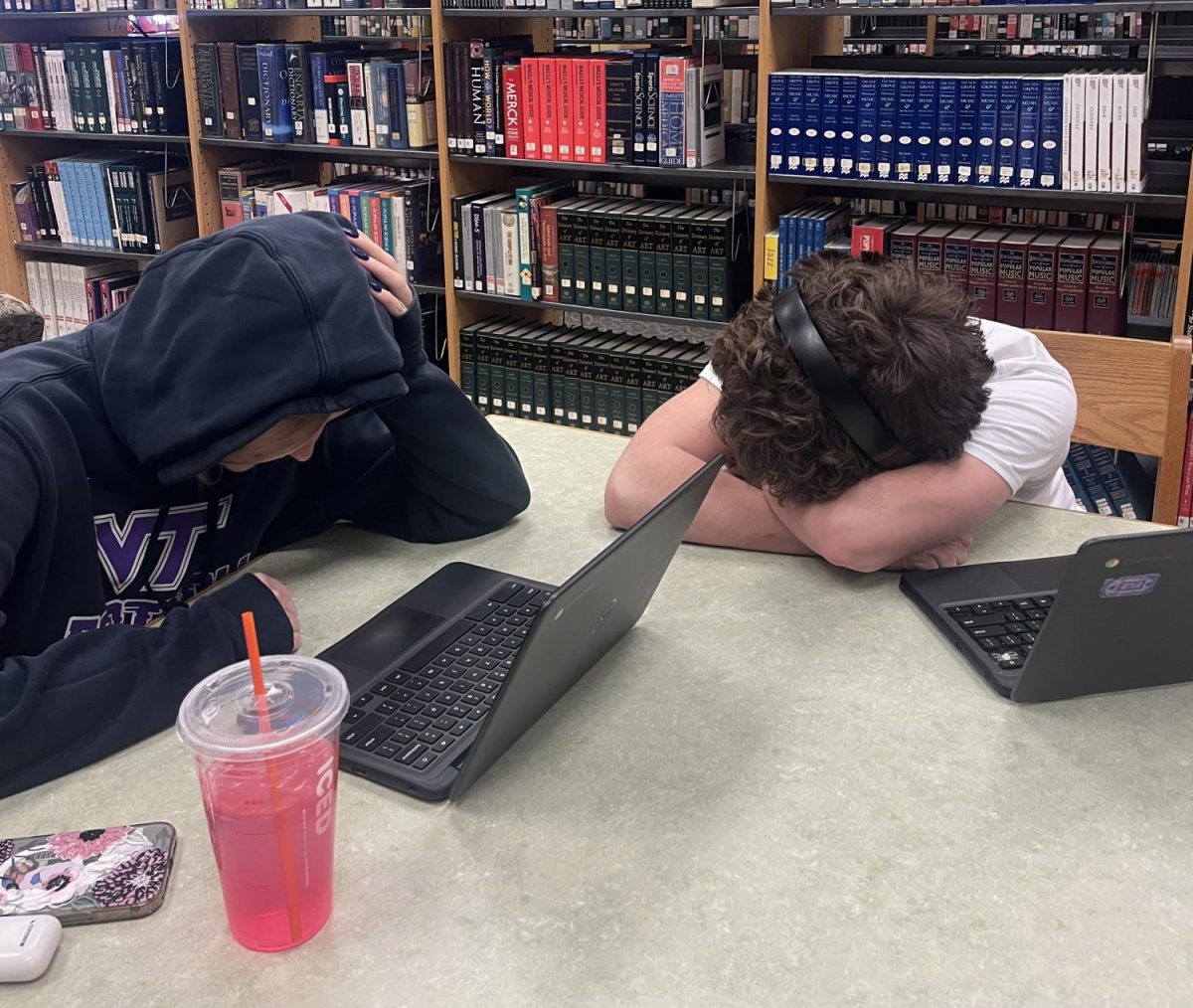
Students are hitting their snooze buttons more than they’re hitting their books.
School start times have been a controversial topic for many years. The debate over whether we should start school at a later time continues to grow as more and more students agree with the statement.
Sleep is not looked at enough as a part of teen mental health and performance. Since, as a society, we tend not to look deeply into it, some have no clue how much sleep can affect a teenager’s mood and behaviors — especially in school. Much of this can be attributed to sleep issues and even wake-up times.
Local psychiatrist, NP, and Oakmont Varsity girls basketball coach Christina Seabury buys into the scientific aspect of this matter.
“During puberty, the brain’s internal clock shifts, and students often don’t feel sleepy until 10 or 11. Early (school) start times force sleep deprivation, which in turn dysregulates dopamine, serotonin, and cortisol.” Seabury continued, “This can cause negative emotions to feel bigger and coping skills to not be as useful, and as a result, students may not do as well in school.”
The American Academy of Pediatrics agrees, publishing research that no middle school or high school should start earlier than 8:30 pm. However, approximately 85% of high schools start school before that 8:30 mark. This leaves only around 15% of schools that actually follow the recommended start time.
Michelle Vuong, sophomore transfer student, talked about her experience of having to commute 40 minutes to school each day. From getting home later than usual from practices, while still having to make time to complete her homework, and still trying to squeeze in time to sleep. She often only gets around 6 hours of sleep.
While interviewing multiple students at Oakmont Regional High School, it was clear that the amount of sleep students are getting is consistently around 5-7 hours, and not the required minimum of 8 hours.
Vuong said, “I often find myself dozing off during the school day, which leads me to be unfocused and unmotivated to do my school work.”
When kids are able to wake up feeling refreshed and ready for school, their performance will start to drastically change. They will have more energy and motivation that will improve their grades as a whole.
Junior student athlete Mia Curtis said, “Getting a good night’s sleep makes me feel much more energized and engaged while at school.”
Studies consistently show evidence that tardies and absences have significantly declined when schools switched to a later start time. Not only did attendance get better, but there is a 16.5% decrease in teen car crashes and 15.6% decrease in depression levels.
Mr. Timothy Caouette, Oakmont Regional High School English teacher, varsity golf and baseball coach, is all for a later start time, but he acknowledges that complications that can come with it, such as busing, sports, and parents.
With later start times, schools will have to find buses that are able to pick up and drop kids off at the correct time and change the routes. When schools push their start time later, the time they end will also be pushed back, which causes sports teams to have to work around it. If times change, parents will have to change their schedules around to make sure their kid makes it to school on time and gets home safely.
According to USA Today, parents want kids home earlier to care for their younger siblings, coaches like the start time so their practices don’t go too late, and staff want to beat rush time.
So, what about the students? Does their opinion matter?
As noted in the USA Today, these early start times were set decades ago when much less knowledge was known on sleep cycles in teenagers. Highlighting that everyone but the students get a say, even when their opinion is potentially the most significant.
Change can be hard, but sometimes it’s extremely necessary for the betterment of a group of people — in this case, it’s the students.