



The usual buzz of notifications will end next school year. Instead of sneaking your phone from the caddy, trying to use it during class, students will now be interactive with classmates and teachers instead of secretly scrolling through social media.
Students’ phones are often blamed for distraction and bad behavior, especially in school. This led the state to implement a law prohibiting students from having access to their phones during the school day. This law will begin in the fall of 2026.
The state came up with this idea of the “bell-to-bell” phone ban because of the low social interactions, mental health issues, and poor academic focus. The state believes that enacting the phone ban law would improve everything and reduce online cyberbullying in schools.
The state wants to ensure that students are only focused on learning and not on video games, social media, or student communication.
The MA legislature passed Bill S.2561 last year. This law also prohibits wireless communication such as AirPods, Apple Watches, Meta Glasses, and body cameras.
Faculty and staff will be expected to enforce the phone ban during their school day, although there are exceptions.
Mental health is the main impact in area schools by cyberbullying through texting, sending videos, and calling with a random number. The damage the phones have has a big impact on mental health and affects young adolescents daily.
Oakmont principal, Mr. Jeffrey Lizotte says, “There are a lot of mental health issues are directly related to social media.”
There is so much cyberbullying, negative interactions, and social comparison with one another. Many young adolescents suffer from self-injurious behavior and suicidal thoughts, or they suffer from chronic sleep deprivation because of their phones. According to EducationWeek statistics, roughly 13% said they were cyberbullied in the 30 days preceding the survey. Similarly, about 15% of those whom we surveyed admitted that they had cyberbullied others at some point in their lives.
Social media often encourages constant comparison, negative comments, and unrealistic expectations. Oakmont English teacher, Mrs. Kristen O’Neill said, “Students are addicted to their phones, they are on them too much, they need to focus more.”
Being more and more addicted to your phone can increase factors that affect mental health, such as anxiety, depression, and low self-esteem. The social media that is released to us can be very addictive, and AI isn’t any better.
Some kids who are obsessed with their phones will try to sneak their phones and get around the rules set in place. However, Lizotte’s key point is that he doesn’t care if it is in the assigned locker or not; it just needs to be off and away. So much that is put on social media can be very harmful, Lizotte says, “The algorithm puts out stuff to kids that is damaging.”
In a recent survey, students and faculty were asked what they would prefer for next year: phones in their personal lockers or in a room caddie for the entire day.
Oakmont is still awaiting the results of the survey and a formal decision on how to store the phone next school year, but Lizotte shared that there are two remaining all-day phone location options: personal student lockers or a phone caddy.
So, obviously, each of these options would limit screen time. Screen time among children and teenagers in the United States has increased significantly since the COVID-19 pandemic. The National Center for Health Studies shows that teens nowadays spend about seven to nine hours a day for non-school purposes.
O’Neill said, “Obsession and not wanting to go outside anymore, too much access, and talking to strangers.”
In teenagers, now, we see a lot of this coming from the phone.
Before the pandemic, students spent way more time going out, socializing with their friends, and being outdoors. After the long months of isolation and virtual learning, many more students depended on their phones, leading to reduced social interaction and increased isolation.
Many people think that their daily routine will be affected by this phone ban being in place. Author Arianna Prothero said that it doesn’t affect the routine, good or bad, and everything stays the same.
Supporters of the phone ban believe it could rebuild those lost friendships. Without phones during the school day, lunch, or passing time, students may want to be more socially interactive with one another, make eye contact, and form stronger friendships. O’Neill hopes that this will be long-term and hopes this will create a more positive environment for everyone.
However, not everyone agrees that the phone ban will lead to major improvements. Some students believe that the phones aren’t the main issue and that behavior and focus depend on the individual.
Oakmont freshman McKenna Walkins said, “The ban will not have a huge impact on me during school hours or even with my daily routine at Oakmont.”
According to Walkins, routines will very much stay the same, and students will still find ways to socialize and make friends without always having to rely on their phones.
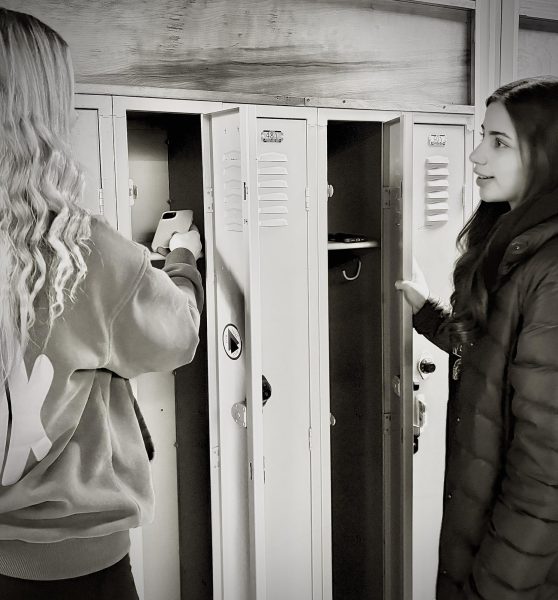
Despite all of these concerns, not everyone believes the phone ban will dramatically change the students’ lives. Freshman Carly Dufrense shared that she doesn’t think that the ban will impact her daily routine negatively or positively. According to her, her daily routines will remain mostly the same, and students will still be able to make friends without always talking through the phone screen.
Overall, the phone ban may be a step in the right direction. It has the potential to reduce most distractions, limit cyberbullying during school hours, and improve focus in the classroom. However, whether it is enough to create long-term change remains uncertain.
The success of the new law, put in place not only for Oakmont Regional High School but for the whole state, will depend on how well the schools, families, and students work together to address phone usage both inside and outside the classroom.

Jada Sandjong • Apr 8, 2026 at 9:08 am
I really like how you addressed the concerns that people have about the phone ban.