
In high schools and colleges across America, students are not just picking classes – they’re choosing sides. From debates about climate policy to discussions of corruption, political opinions continue to break peer relationships.
Pew Research Center found a growing rise in hostility between political groups. In 2022, 72% of republicans and 63% of democrats viewed their opposing political party as unethical. When political disagreement turns into moral judgment, it becomes hard for students to see each other as classmates first and political opponents second.
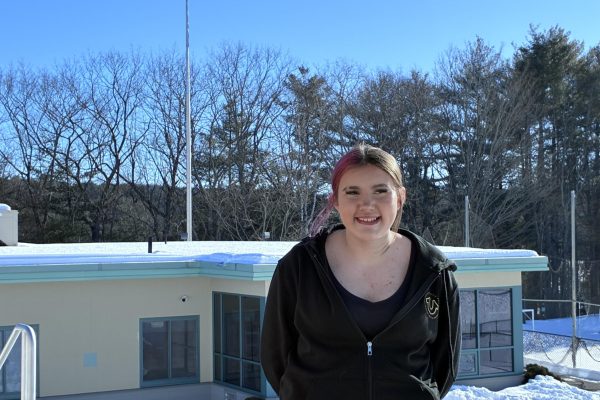
“As someone who is very leftist, it is hard to be friends with people who think ruining lives is okay,” said sophomore Amy Dorsey.
A conservative senior shared similar frustrations: “It’s like adding fuel to the fire every time parties talk, someone is always trying to get another person angry.”
A study conducted by Miami University, Texas A&M, and Louisiana State University discloses that left-leaning students were willing to pay approximately $2,617 more than a baseline tuition in order to avoid right-wing students, while Conservatives prepared $2,201 to dodge liberal classmates.
Political polarization is not just an on-campus issue; in fact, it’s everywhere, including social media. TikTok, Instagram, and even Snapchat seem to be hubs for political discourse. A research study conducted by the National Center for Social Research found that 58% of those under the age of 35 harvest most of their political news from social media. But the thing about these platforms is that they analyze engagement to curate every user’s feeds, often trapping users within “echo chambers” of their own viewpoints. This results in isolated discourse that sends public opinions to extremes; Furthermore, an overwhelming 98% of social media users report seeing misinformation on their feeds, a phenomenon now known as fake news.
“I have argued with many people about Trump’s administration on TikTok and Snapchat. I never know what to believe because, well, I never know what’s true,” stated senior Zoe Carreras.
The confusion and division fueled by social media does not just remain online – it follows students into classrooms, especially in high school, where opinions are still forming, and peer influence is strong. What begins as disagreement behind a screen carries over into face-to-face interactions, where misunderstandings and frustrations escalate more quickly.
As students enter discussions already influenced by biased and misleading information, it becomes harder to separate facts from opinions and even harder to engage respectfully with those who think differently. Over time, these tensions turn schools into places of conflict rather than learning, making it difficult for students to collaborate, think critically, and understand one another.
Schools are supposed to be places where students learn how to think critically, challenge ideas, and grow through discussion. But if students are actively trying to avoid those who disagree with them, classrooms become verbal boxing rings rather than spaces for peaceful debate.
Instead of separating themselves, schools could encourage structured discussions where students feel safe expressing their views. Teachers can set clear guidelines for respectful debate, and students can practice listening before responding.
If political polarization continues to shape our nation’s student relationships, schools risk becoming divided spaces rather than united learning environments. Education is not meant to be comfortable all the time – it is meant to challenge students and prepare them for the diverse world beyond graduation.