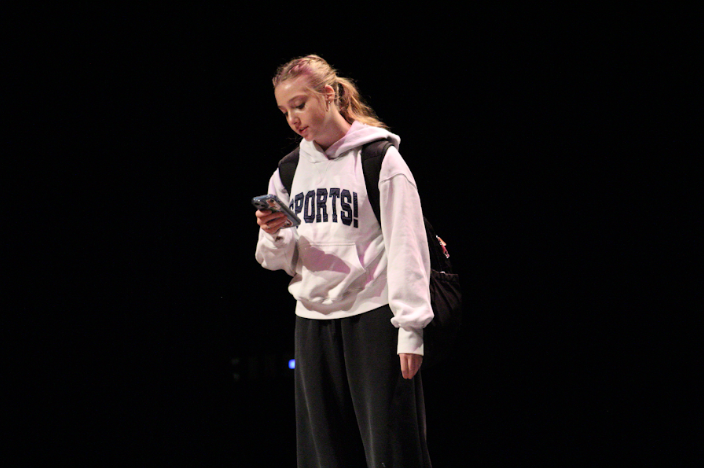

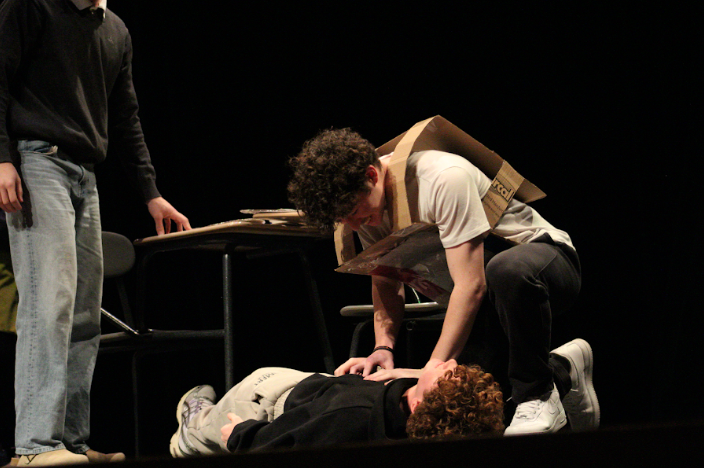
This year, staff at Oakmont Regional High School decided to bring back March Madness, which was originally started after the pandemic, to allow students to interact and work with each other on something they may have never done before.
March Madness is a late winter/spring tournament that combines multiple classes and presents teams with various challenges based on 10 different themes. Each team is given creative freedom in how they present each topic, and it is entirely up to the group to come up with an effective and unique way to address their chosen theme. While staff members are there to provide support and answer any questions, it is ultimately up to the students to work together to create the final product.
This tournament requires students to step out of their comfort zones and take on various responsibilities to help their team succeed. Each challenge requires different members of the team to step into leadership roles and guide their group to success, while also knowing when to step back and listen to others.
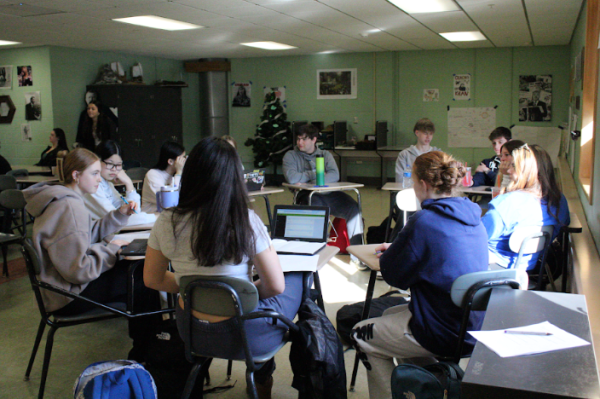
Mr. Dana Altobelli, March Madness adviser and veteran history teacher at Oakmont High School, explained that the event was started after COVID-19. Altobelli went on to explain that his thought was that March is such a long month: “31 days, no half days, no holidays, end of winter—people are sick of winter.”
Altobelli said that March Madness helps break up the school day and school year, giving students something to look forward to and talk about.
Mr. R. Lincoln Stiles Jr., history teacher at Oakmont High School, said, “I believe that March Madness was successful and that it is a great opportunity to break up the long month of March.”
Stiles also stated that not only does this break up the long month, but gives students something that is not necessarily academic, but something they can learn from and carry with them into their future endeavors.
This year in particular, the expectation was that students would have time to work on their performances during three Fridays leading up to March 27, and that they would need to collaborate and use their time wisely. Ironically, this year’s performance was delayed a week because of a Snow Day to an April 3rd performance.
Each group had to choose a theme. There were ten, ranging from “What’s the worst that could happen? to “Be more human,” “This is what affordable survival looks like,” and “You wanted it. Now you get it!”
Altobelli also said, “It was a way to get students to do things they hadn’t done before—work with big groups, not just groups of three or four, but [large] groups on a problem with a pretty tight time constraint.”
When forming the groups, each class was divided into smaller groups and then paired with groups from other classes. In this process, different grades were mixed, so each group included varying numbers of freshmen, sophomores, juniors, and seniors.
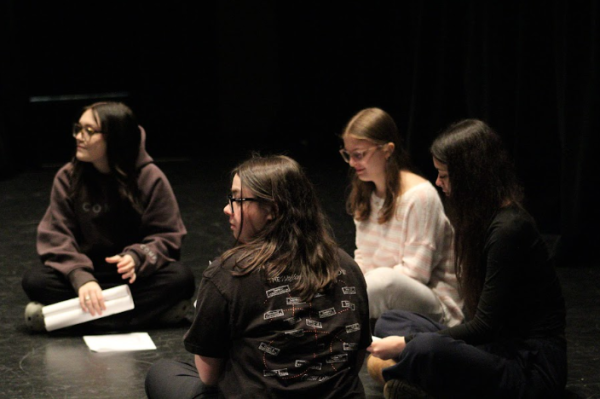
Altobelli shared that groups with a mix of freshmen and sophomores, as well as juniors and seniors, tended to work well together. However, pairing freshmen and seniors could sometimes be more challenging.
Cayleigh Imprescia, a junior at Oakmont High School who contributed to two groups during March Madness this year, shared that looking back on her freshman year, she remembers how intimidating it was to get up on stage in front of half the school. She recalled saying words she wasn’t sure she would remember, but realized afterward that it wasn’t bad at all and that she made many friends and positive memories.
Imprescia also shared that her experience this year was unforgettable and that she is looking forward to what’s to come next year.
“I had a lot of fun. We had lots of mix-ups and struggles, but in the end, we made it fun and funny,” said Imprescia.
In the end, Imprescia stated that she would “100%” participate in March Madness again if given the opportunity because it was a great experience. Even though each team she was on encountered a few hiccups, they pulled it together and made the best of the situation.
Freshmen Laura River and Ellie Hubbard shared that they were both nervous and scared, but that it turned out to be fun, and they enjoyed being a part of it. The theme of “What’s the Worst That Could Happen” resonated, as Hubbard also said she really enjoyed witnessing the other performances.
Oakmont Regional High School student Caiden Santiago shared that his group’s performance was based on a job interview for a secret society and that his role was on the props team.
Santiago had shared that he felt really uncomfortable being separated from the few people he knew, but that it later turned into an enjoyable experience for him. He shared his liking for bouncing their different ideas off one another and acknowledging everyone’s ideas.
Oakmont Regional High School students have mentioned running into complications due to the lack of time presented to them, and that they would often have to scramble at the last minute because of people not showing up, props being stolen, and many other issues.
“This year definitely felt rushed, but we were still able to put on a decent performance,” says Chole Hewitt, a Junior at Oakmont who also participated in March Madness her freshman year.
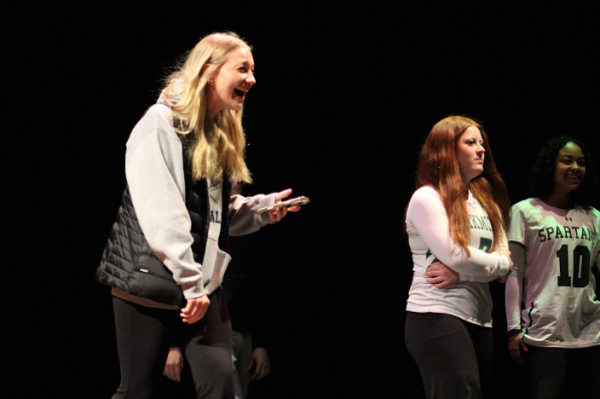
Hewitt expresses that during her freshman year, her group was more prepared, and she felt like they had more time to really pull together and execute their plan, and that she felt this year seemed a little rushed due to scheduling mix-ups. Hewitt had also shared that both years she participated in March Madness, her group was the first to go and that she preferred to go first.
The last thing Hewitt shared was that, even though things went wrong during the performance both years she participated, “I will always love March Madness and hope to do it next year.”
Many students at Oakmont High School feel nervous and overwhelmed at the thought of March Madness, but have shared that once they got into it, they really enjoy March Madness because it not only provides a break during the long weeks of March but also creates lasting memories and opportunities to meet new people along the way.